
Children learn safety best when they have regular opportunities to practise it in familiar places. The home provides many simple moments where parents and carers can teach children to pause, notice what is around them, and make a safe decision. The Stop, Look, Choose method gives children three clear steps that can be used throughout the day.
The first way to practise is before using the stairs. Ask your child to stop at the bottom or top, look at their shoelaces, check the steps, and choose to hold the handrail. This teaches them to prepare before moving instead of rushing.
The second way is in the kitchen. Children can stop before entering, look for hot pans, spilled water, open cupboards, or objects on the floor, and choose a safe place to stand. Parents can explain each risk calmly and show children what a safer choice looks like.
The third way is during indoor play. Before running, jumping, or climbing on furniture, encourage your child to stop and look around. They can check for low tables, hard corners, toys on the floor, or people nearby. They can then choose a safer space or a different activity.
The fourth way is near doors and driveways. Children can practise stopping before opening a door or stepping outside. They should look for moving cars, bicycles, pets, or other people before choosing whether it is safe to continue. An adult should always remain close when road safety is involved.
The fifth way is through a daily safety game. Parents can choose a room and ask the child to find three things they should notice before moving. The child can point out a wet floor, an untied lace, a chair in the way, or an object above their head. This makes safety practice enjoyable while improving awareness.
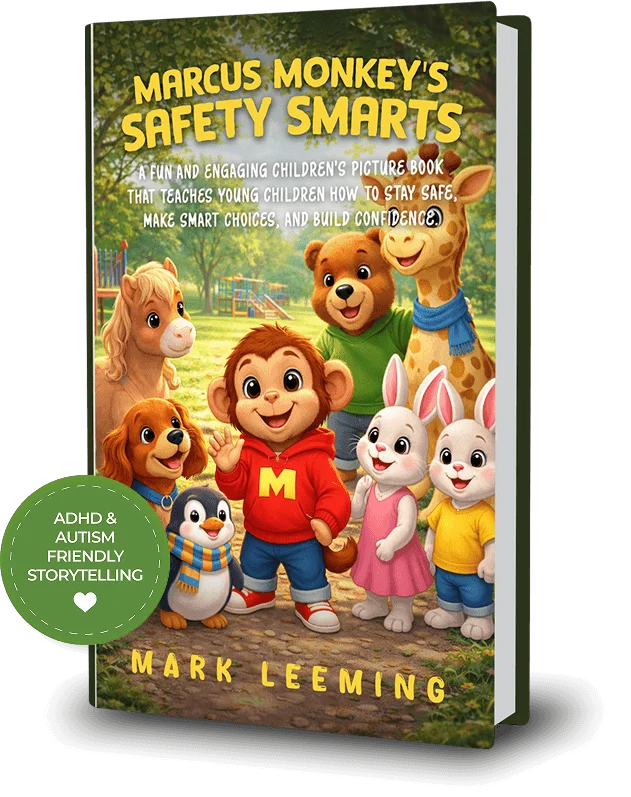
Marcus Monkey’s Safety Smarts: Stop. Look. Choose. gives families a warm and engaging way to introduce these habits. Marcus is an energetic monkey who loves to run, climb, and jump, but he sometimes moves before thinking. With support from the Safety Squad, he learns how to pause, check his surroundings, and make better decisions.
The book uses simple language, repeated phrases, visual learning, and positive praise. These features make it especially helpful for young children, including children with ADHD or autism who may benefit from clear routines and consistent reminders.
By practising Stop, Look, Choose at home, children can begin to use the method naturally in school, at the playground, and outdoors. Marcus Monkey’s Safety Smarts helps turn everyday safety lessons into habits children can understand, remember, and enjoy.