
Some children describe their bodies as feeling fast. Their legs may feel ready to run, their hands may move constantly, and their thoughts may jump quickly from one thing to another. Their tummy may feel fizzy, and staying still may seem almost impossible. This does not mean the child is being difficult. It often means they need support to slow their body before they can make a safe choice.
Adults can begin by recognising what the child is feeling. A calm statement such as, “Your body feels fast right now,” shows understanding without criticism. Naming the feeling can help the child notice what is happening inside their body.
The next step is to offer one simple instruction. Too many words may be difficult to follow when a child feels excited or overwhelmed. A parent, carer, or teacher can say, “Stop your feet,” “Take one slow breath,” or “Press your feet into the floor.” These physical actions help the child focus on the present moment.
Counting slowly can also help. Ask the child to count to three while keeping both feet on the ground. The adult can count with them and speak in a steady voice. Once the child has paused, they can look around and decide what to do next.
The Stop, Look, Choose method provides a clear routine for these moments. Stop gives the child time to freeze their body and breathe. Look helps them notice whether the floor is wet, something is moving, their shoelaces are untied, or an object is above their head. Choose allows them to select a safer action.
Praise should focus on the effort the child made. Adults can say, “You slowed your feet,” “You took a breath before moving,” or “You looked around and made a safe choice.” This encourages the child to use the same steps again.
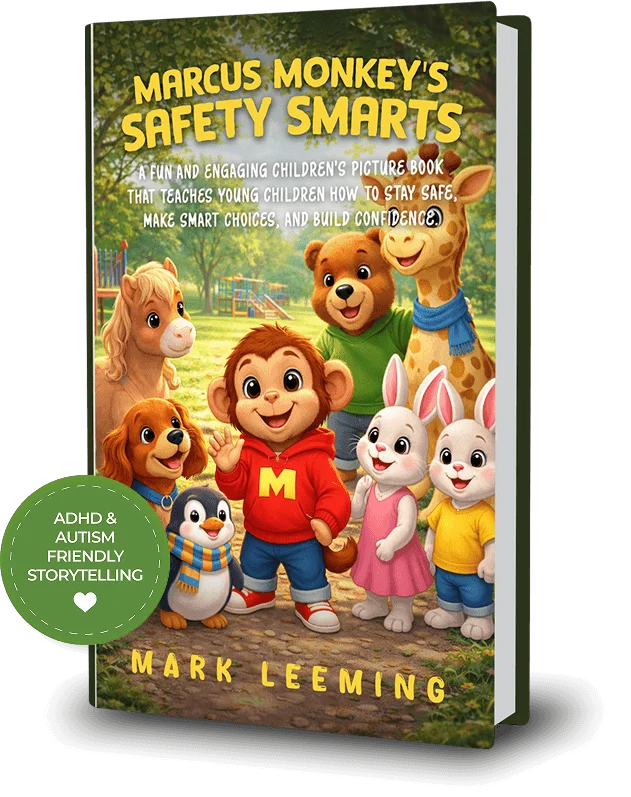
Marcus Monkey’s Safety Smarts: Stop. Look. Choose. helps children understand what it means to feel fast inside. Marcus loves to move, climb, run, and jump. Sometimes his legs feel buzzy, his tummy feels fizzy, and his thoughts feel zoomy. Instead of feeling ashamed, Marcus learns practical ways to settle his body and think before acting.
With support from the Safety Squad, Marcus practises taking a slow breath, pressing his feet into the ground, counting to three, and checking his surroundings. The story uses simple language, repetition, familiar situations, and positive encouragement.
The book is especially supportive for children with ADHD or autism who may move before they have time to process a situation. It gives parents, carers, and teachers a shared language they can use calmly and consistently.
Marcus Monkey’s Safety Smarts shows children that having energy is not wrong. They can still run, climb, jump, and enjoy being active. They simply learn how to pause, understand what is happening around them, and choose a safer next step.