
Blog

What to Say When Your Child Moves Without Thinking

Young children often move before they fully understand what is happening around them. They may run across a wet floor, climb something unsafe, rush towards the stairs, or step in front of moving playground equipment. These actions are usually caused by excitement, curiosity, or excess energy rather than deliberate disobedience.

The words adults use in these moments can shape how children respond. Shouting, blaming, or using frightening warnings may stop the behaviour briefly, but it does not always teach the child what to do differently. Calm and direct language gives children a clear action they can remember and repeat.

A helpful phrase is, “Stop your body.” This tells the child exactly what is expected. Once the child is still, an adult can say, “Look around you.” This encourages the child to notice the floor, nearby objects, other people, or anything that may be moving.

The next instruction can be, “Choose the safest way.” The adult can then guide the child towards a practical decision, such as walking slowly, holding the handrail, waiting for a turn, or asking for help.
Parents can also use short questions. They might ask, “What do you notice?” “Is anything moving?” “Could you bump your head?” or “What is the safe choice?” These questions help children take part in the decision instead of simply being told what not to do.

It is important to recognise safe behaviour when it happens. Adults can say, “You stopped before the stairs,” “You waited until the swing stopped,” or “You looked before you moved.” Specific praise helps children understand which action was responsible and encourages them to repeat it.

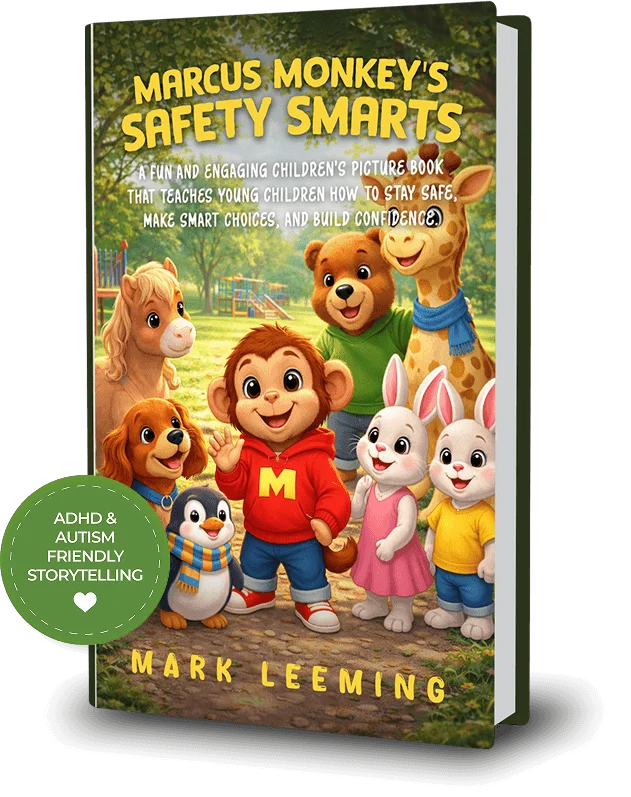
Marcus Monkey’s Safety Smarts: Stop. Look. Choose. offers parents, carers, and teachers a simple way to introduce this language. Marcus is an energetic young monkey who loves to run, climb, and jump. At first, he often moves without thinking, but the Safety Squad teaches him how to pause, check his surroundings, and choose a safer action.

The story uses familiar situations, calm reminders, repetition, and positive praise. Its clear approach can be especially useful for children with ADHD or autism who may benefit from predictable instructions and repeated practice.

Children should not be made to feel ashamed for being active. They need guidance that helps them understand how to use their energy safely. With phrases such as “Stop. Look. Choose,” adults can turn impulsive moments into practical lessons.

Marcus Monkey’s Safety Smarts helps children learn that they can still explore, play, and enjoy movement. They simply need to pause, notice what is around them, and think before taking the next step.

Teaching Children to Move Safely Through School Corridors

School corridors can become crowded and noisy, especially when children are moving between classrooms, heading to lunch, or preparing for break time. Young children may feel excited and begin running, turning corners quickly, or moving without noticing doors, bags, furniture, and other pupils nearby. Teaching safe corridor behaviour can reduce accidents while helping children become more aware of their surroundings.

Children need clear instructions that explain what they should do. Instead of only saying, “Do not run,” teachers can use the phrase, “Use walking feet.” This gives children a direct action to follow. They can also be reminded to keep their hands close to their bodies, watch where they are going, and leave enough space between themselves and others.

The Stop, Look, Choose method can make corridor safety easier to remember. Before leaving the classroom, children can stop their bodies and take a slow breath. They can then look for people, open doors, objects on the floor, or busy corners. Finally, they can choose to walk calmly, wait for space, or follow the person in front of them.

Teachers can demonstrate the method before asking children to practise it. They might show the difference between rushing around a corner and walking carefully while checking the path ahead. Children can then take turns demonstrating safe movement and explaining what they noticed.

Consistent reminders are important. Using the same words each time children enter a corridor helps the behaviour become familiar. Teachers can say, “Stop. Look. Choose,” before the class begins moving. Over time, children may start repeating the steps without being prompted.

Positive praise can strengthen safe habits. A teacher might say, “You slowed down before the corner,” or, “You left enough space for your classmate.” Specific praise shows children exactly which action was responsible and encourages them to repeat it.

Marcus Monkey’s Safety Smarts: Stop. Look. Choose. introduces corridor safety through a character young readers can understand. Marcus loves to move quickly, but one morning he races down the school corridor and bumps his head on a door frame. With help from the Safety Squad, he learns that walking indoors gives him more time to notice what is around him.

The book uses simple wording, repeated instructions, visual learning, and encouraging responses. These features make it especially useful for young children, including those with ADHD or autism who may benefit from calm guidance and predictable routines.

Marcus Monkey’s Safety Smarts helps teachers turn corridor safety into a practical lesson children can use every day. It reminds them that moving carefully is not about slowing down all the fun. It is about protecting themselves and respecting everyone sharing the space.

How to Introduce Stop, Look, Choose in the Classroom

Classrooms are busy places where children move between desks, activity areas, doors, corridors, and play spaces throughout the day. Young children may rush, become distracted, or act before noticing what is happening around them. Introducing the Stop, Look, Choose method gives them a simple routine for making safer decisions.

Teachers can begin by explaining each step in clear language. Stop means freezing the body, keeping hands and feet still, and taking a slow breath. Look means checking the area for anything that could cause a problem. Choose means deciding what action is safest.

The method should first be demonstrated rather than only explained. A teacher can walk towards a toy left on the floor, stop before reaching it, look down, and choose to move around it safely. Children can then practise the same routine together. Physical demonstrations make the steps easier to understand and remember.

Repetition helps the method become part of the classroom routine. Teachers can use Stop, Look, Choose before children line up, leave the room, use stairs, begin physical activities, or enter the playground. Using the same words in different situations helps children understand that the method can be applied anywhere.

Visual reminders can also support learning. The words Stop, Look, and Choose can be displayed in the classroom with simple pictures showing a child freezing, checking the surroundings, and selecting a safe action. Teachers can point to the images when children need a reminder.

Role play is another useful classroom activity. Children can practise what to do when the floor is wet, a chair is in the way, someone is running nearby, or playground equipment is moving. They can take turns identifying the risk and explaining their safest choice.

Praise should be specific and connected to the behaviour. A teacher might say, “You stopped before walking around the chair,” or, “You looked carefully before leaving the classroom.” This helps children understand exactly what they did well.

Marcus Monkey’s Safety Smarts: Stop. Look. Choose. gives teachers an enjoyable way to introduce this method through storytelling. Marcus is an energetic monkey who loves to run, climb, and jump. With guidance from the Safety Squad, he learns to slow down, notice possible dangers, and make safer decisions.

The book includes familiar situations involving corridors, wet playgrounds, stairs, swings, slides, climbing, jumping, and low objects. Its clear wording, repeated message, visual approach, and positive encouragement make it suitable for young learners, including children with ADHD or autism.

By sharing Marcus Monkey’s Safety Smarts in the classroom, teachers can turn safety instruction into a calm and memorable learning experience. Children learn that they can remain active, curious, and confident while taking a moment to think before they move.

Helping a Child Who Feels Fast Inside

Some children describe their bodies as feeling fast. Their legs may feel ready to run, their hands may move constantly, and their thoughts may jump quickly from one thing to another. Their tummy may feel fizzy, and staying still may seem almost impossible. This does not mean the child is being difficult. It often means they need support to slow their body before they can make a safe choice.

Adults can begin by recognising what the child is feeling. A calm statement such as, “Your body feels fast right now,” shows understanding without criticism. Naming the feeling can help the child notice what is happening inside their body.

The next step is to offer one simple instruction. Too many words may be difficult to follow when a child feels excited or overwhelmed. A parent, carer, or teacher can say, “Stop your feet,” “Take one slow breath,” or “Press your feet into the floor.” These physical actions help the child focus on the present moment.

Counting slowly can also help. Ask the child to count to three while keeping both feet on the ground. The adult can count with them and speak in a steady voice. Once the child has paused, they can look around and decide what to do next.

The Stop, Look, Choose method provides a clear routine for these moments. Stop gives the child time to freeze their body and breathe. Look helps them notice whether the floor is wet, something is moving, their shoelaces are untied, or an object is above their head. Choose allows them to select a safer action.

Praise should focus on the effort the child made. Adults can say, “You slowed your feet,” “You took a breath before moving,” or “You looked around and made a safe choice.” This encourages the child to use the same steps again.

Marcus Monkey’s Safety Smarts: Stop. Look. Choose. helps children understand what it means to feel fast inside. Marcus loves to move, climb, run, and jump. Sometimes his legs feel buzzy, his tummy feels fizzy, and his thoughts feel zoomy. Instead of feeling ashamed, Marcus learns practical ways to settle his body and think before acting.

With support from the Safety Squad, Marcus practises taking a slow breath, pressing his feet into the ground, counting to three, and checking his surroundings. The story uses simple language, repetition, familiar situations, and positive encouragement.

The book is especially supportive for children with ADHD or autism who may move before they have time to process a situation. It gives parents, carers, and teachers a shared language they can use calmly and consistently.

Marcus Monkey’s Safety Smarts shows children that having energy is not wrong. They can still run, climb, jump, and enjoy being active. They simply learn how to pause, understand what is happening around them, and choose a safer next step.

Five Ways to Practise Stop, Look, Choose at Home

Children learn safety best when they have regular opportunities to practise it in familiar places. The home provides many simple moments where parents and carers can teach children to pause, notice what is around them, and make a safe decision. The Stop, Look, Choose method gives children three clear steps that can be used throughout the day.

The first way to practise is before using the stairs. Ask your child to stop at the bottom or top, look at their shoelaces, check the steps, and choose to hold the handrail. This teaches them to prepare before moving instead of rushing.

The second way is in the kitchen. Children can stop before entering, look for hot pans, spilled water, open cupboards, or objects on the floor, and choose a safe place to stand. Parents can explain each risk calmly and show children what a safer choice looks like.

The third way is during indoor play. Before running, jumping, or climbing on furniture, encourage your child to stop and look around. They can check for low tables, hard corners, toys on the floor, or people nearby. They can then choose a safer space or a different activity.

The fourth way is near doors and driveways. Children can practise stopping before opening a door or stepping outside. They should look for moving cars, bicycles, pets, or other people before choosing whether it is safe to continue. An adult should always remain close when road safety is involved.

The fifth way is through a daily safety game. Parents can choose a room and ask the child to find three things they should notice before moving. The child can point out a wet floor, an untied lace, a chair in the way, or an object above their head. This makes safety practice enjoyable while improving awareness.

Marcus Monkey’s Safety Smarts: Stop. Look. Choose. gives families a warm and engaging way to introduce these habits. Marcus is an energetic monkey who loves to run, climb, and jump, but he sometimes moves before thinking. With support from the Safety Squad, he learns how to pause, check his surroundings, and make better decisions.

The book uses simple language, repeated phrases, visual learning, and positive praise. These features make it especially helpful for young children, including children with ADHD or autism who may benefit from clear routines and consistent reminders.

By practising Stop, Look, Choose at home, children can begin to use the method naturally in school, at the playground, and outdoors. Marcus Monkey’s Safety Smarts helps turn everyday safety lessons into habits children can understand, remember, and enjoy.

Best Ways to Teach Impulse Control to Children

Impulse control helps children pause before acting, consider what is happening around them, and make a safer decision. Young children are still developing this ability, so they may run, climb, interrupt, grab, or rush towards something without thinking about the result. These actions are often caused by excitement, curiosity, or strong emotions rather than deliberate misbehaviour.

One of the best ways to teach impulse control is to use short and consistent instructions. When children are excited or overwhelmed, long explanations can be difficult to process. Simple phrases such as “Stop your body,” “Take a breath,” and “Look around” give them clear actions they can follow.

Movement games can make this skill enjoyable. Children can dance, march, or run in a safe space and freeze when an adult says, “Stop.” Once they are still, they can take a breath and wait for the next instruction. Games like this help children practise controlling their bodies without making the lesson feel like a punishment.

Adults can also teach children to notice how their bodies feel. A child may describe buzzy legs, a fizzy tummy, busy hands, or zooming thoughts. Naming these feelings helps the child recognise when they need to slow down. Pressing both feet into the floor, counting to three, or taking a slow breath can make pausing easier.

Giving children choices is another helpful approach. Instead of only saying what they cannot do, adults can offer two safe options. A child who wants to run indoors can choose to walk or wait until they reach the playground. A child who wants to climb a fence can choose the climbing frame instead. Safe choices help children feel involved in the decision.

Positive praise strengthens progress. Adults can say, “You stopped before the stairs,” “You waited for your turn,” or “You looked before moving.” Specific praise shows children exactly what they did well and encourages them to repeat it.

Marcus Monkey’s Safety Smarts: Stop. Look. Choose. introduces impulse control through an energetic character children can understand. Marcus loves to run, climb, and jump, but sometimes he moves so quickly that he forgets to think. With help from the Safety Squad, he learns to stop his body, check his surroundings, and choose a safer action.

The book uses simple language, repetition, visual learning, familiar situations, and calm encouragement. It can be especially supportive for children with ADHD or autism who may benefit from predictable routines and clear reminders.

Marcus Monkey’s Safety Smarts gives parents, carers, and teachers a practical tool for teaching children how to manage their energy without making them feel ashamed. It shows young readers that being active is something to enjoy. They simply need to pause, notice what is happening, and make a smart choice before they move.

Helping Children Build Confidence One Safe Choice at a Time

Confidence does not appear in children all at once. It grows through small moments, steady encouragement and simple lessons they can practise every day. For young children, one of the most important forms of confidence is knowing how to make safe choices.

That is the heart of Marcus Monkey’s Safety Smarts by Mark Leeming, a soon-to-be-released children’s book that teaches safety through cheerful storytelling, repetition and a lovable character children can easily relate to. Marcus loves to run, climb and jump, but he also learns a powerful lesson: Stop. Look. Choose.

Safety Builds Self-Belief

When children understand what to do in everyday situations, they feel more capable. They begin to see themselves as active decision makers, not just children waiting to be corrected by adults.

Marcus shows this beautifully. At first, he moves quickly and sometimes forgets to think. With help from his Safety Squad, he learns how to pause, look around and choose a safer action. This makes safety feel encouraging rather than frightening.

Small Lessons, Big Growth

The book introduces safety through familiar moments: walking indoors, watching for swings, tying shoelaces, staying away from roads, using stairs carefully and thinking before climbing or jumping.

These are simple situations, but for a child, they are important steps toward independence. Every time Marcus makes a safe choice, he becomes more confident. Young readers can follow that same path in their own lives.

A Positive Tool for Parents and Teachers

Parents, carers and educators often repeat safety reminders throughout the day. Marcus Monkey’s Safety Smarts gives those reminders a friendly story that children can remember.

Instead of saying only, “Be careful,” adults can say, “What would Marcus do?” That question invites children to think for themselves. It turns a rule into a conversation and helps children practise awareness in a positive way.

Confidence Through Practice

Children learn best through repetition, praise and clear examples. The phrase Stop. Look. Choose. is easy to repeat and easy to apply. It gives children a calm process they can use when they feel excited, rushed or unsure.

This is especially helpful because the story does not ask children to stop being active. Marcus still enjoys playing. He simply learns to think first. That balance makes the message practical and child-friendly.

A Story With Lasting Value

By the end of the story, Marcus is not only making safer choices for himself. He also helps another young monkey learn the same steps. This shows children that confidence grows into leadership, kindness and responsibility.

Marcus Monkey’s Safety Smarts by Mark Leeming is a bright and meaningful story for families, schools and early learning spaces. Soon to be available for readers, it offers children a simple message that can stay with them long after story time ends: smart choices help us stay safe and every safe choice helps us grow.

Preparing Children for the World Through Positive Storytelling

Children meet the world through stories before they fully understand it through experience. A good story can teach them kindness, courage, patience and responsibility in a way that feels natural. That is why positive storytelling is such a powerful tool for early learning.

Marcus Monkey’s Safety Smarts by Mark Leeming, soon to be available for readers, is a bright and thoughtful children’s book that helps young children learn safety through warmth, repetition and playful adventure. Instead of using fear, the story gives children a simple and memorable guide: Stop. Look. Choose.

Learning Through a Character Children Can Love

Marcus Monkey is active, curious and full of energy. He loves to run, climb and jump. Many children will see themselves in him right away. Because Marcus is relatable, his lessons feel easy to understand.

When Marcus moves too quickly or forgets to think, the story does not shame him. Instead, his friends gently guide him. This positive approach helps children learn that mistakes are part of growing. What matters is learning to pause, notice what is happening and make a better choice next time.

Safety Without Fear

Safety education can sometimes sound serious or frightening, especially for young children. Marcus Monkey’s Safety Smarts handles this carefully. It teaches real safety habits while keeping the tone cheerful, calm and reassuring.

Children learn about walking feet, wet playgrounds, swings, stairs, fences, roads and other everyday situations. These are not presented as scary dangers. They are presented as moments where children can use their thinking skills.

That difference matters. A child who feels afraid may freeze or avoid exploring. A child who feels prepared is more likely to act with confidence.

The Power of Repetition

Young children learn best when important ideas are repeated in simple language. The phrase Stop. Look. Choose. gives children a clear pattern they can remember.

Stop means pause the body.

Look means check what is around you.

Choose means make a safe decision.

This simple rhythm can follow children beyond the book. Parents, carers and teachers can use it at home, in the classroom, at the park or on the way to school. Over time, the words can become a practical habit.

Encouraging Confidence and Independence

One of the strongest messages in Mark Leeming’s story is that safety is not about stopping children from being children. Marcus still runs. He still climbs. He still jumps. The change is that he learns to think first.

That is a powerful lesson for young readers. It shows them that they can enjoy the world while also learning how to protect themselves. It also encourages independence because children begin to understand why a safe choice matters.

A Story for Families and Classrooms

Marcus Monkey’s Safety Smarts is more than a fun picture book. It is a helpful conversation starter for families, teachers and caregivers who want to teach safety in a kind and memorable way.

With its cheerful characters and practical message, Mark Leeming’s upcoming book prepares children for the world by giving them simple words, positive examples and the confidence to make smart choices.

Because safety begins with one small moment of thinking first.

How Marcus Monkey’s Safety Smarts Encourages Independent Thinking

Children grow more confident when they learn how to pause, notice and make good choices for themselves. That is the central strength of Marcus Monkey’s Safety Smarts by Mark Leeming, a soon-to-be-released children’s book that teaches safety in a warm, playful and memorable way.

Marcus Monkey is full of energy. He loves to run, climb and jump, just like many young children. At first, he often moves before thinking. Through gentle guidance from his Safety Squad, Marcus learns one simple rule: Stop. Look. Choose.

Learning to Pause Before Acting

Independent thinking begins with a pause. Young children often react quickly because they are excited, curious or eager to join the fun. Marcus shows readers that stopping for a moment does not ruin the adventure. It helps make the adventure safer.

Whether he is near the road, on the playground or helping a new friend, Marcus learns to slow down and check what is happening around him. This teaches children a valuable lesson: they can take a moment to think before they act.

Simple Choices Build Confidence

The beauty of Mark Leeming’s story is that it does not make safety feel heavy or scary. Instead, it turns safety into a choice children can understand. Marcus learns to ask himself what is safe, what is moving, what is too high and where he should stand.

These small questions help children practise problem-solving. Instead of only waiting for an adult to tell them what to do, they begin to understand how to notice risks and choose wisely.

A Story That Supports Parents and Teachers

Parents, carers and educators often remind children about safety many times a day. Marcus Monkey’s Safety Smarts gives those reminders a friendly story shape. After reading, adults can simply ask, “What would Marcus do?” That question encourages children to think instead of only follow instructions.

This makes the book useful at home, in classrooms and in early learning settings. It gives children language they can remember and use in real situations.

Helping Children Become Safety Leaders

One of the most engaging parts of the story is Marcus’s growth. He begins as a lively monkey who needs reminders, but later he becomes someone who helps others. When Milo, a new monkey, starts to rush across the playground, Marcus gently teaches him to Stop. Look. Choose.

That moment matters because it shows children that learning safety is not just about protecting themselves. It can also help them care for their friends.

A Smart Start for Young Readers

Marcus Monkey’s Safety Smarts by Mark Leeming encourages children to become more aware, more thoughtful and more confident in everyday situations. With its cheerful characters, clear repetition and practical safety message, the book helps young readers understand that being safe does not mean stopping the fun.

It means thinking first.

Soon to be available for readers, this bright and purposeful story is a wonderful choice for families, schools and anyone who wants to help children build safe habits with confidence.

Why Safety Education Should Start Long Before the Classroom

Children begin learning about the world long before they sit at a classroom desk. They learn while running through the house, climbing at the park, reaching for toys, crossing pavements and following the people they trust. Every small moment becomes a lesson. That is why safety education should not wait until school begins. It should start early, gently and naturally.

This is the heart of Marcus Monkey’s Safety Smarts by Mark Leeming, a soon-to-be-released children’s book that turns safety learning into a fun and memorable story. Through Marcus Monkey and his cheerful Safety Squad, young readers are introduced to one simple rule that can guide them through many everyday situations: Stop. Look. Choose.

Safety Starts With Everyday Moments

Young children are curious by nature. They want to run, jump, climb, explore and touch everything around them. That curiosity is wonderful, but it also means they need simple tools to help them pause before acting.

Safety education works best when it feels like part of daily life. A child does not need a lecture to understand safety. They need repeated, loving reminders. They need examples they can picture. They need words they can remember when excitement takes over.

In Marcus Monkey’s Safety Smarts, Marcus learns this through familiar situations, such as moving too fast, playing near roads and helping a new friend make a safer choice. These scenes make safety feel practical rather than frightening.

Teaching Without Fear

One of the strongest parts of early safety education is balance. Children should not be made afraid of the world. They should be taught how to move through it with awareness.

Mark Leeming’s story supports this beautifully. Marcus is not told to stop being active. He still climbs. He still runs. He still jumps. The difference is that he learns to think first. That message matters because it respects a child’s energy while guiding it in a safer direction.

The phrase “Stop. Look. Choose.” is simple enough for young children to repeat, but meaningful enough to become a real habit. It gives children a clear process they can use at home, at school, at the playground and beyond.

A Helpful Resource for Parents and Educators

Parents, carers and teachers often repeat the same safety reminders every day. Walk inside. Wait your turn. Look where you are going. Stay away from the road. Hold the rail. These reminders are important, but children absorb them more easily when they are connected to a story.

That is where Marcus Monkey’s Safety Smarts becomes especially useful. It gives adults a friendly way to talk about safety without sounding strict or alarming. After reading, families and classrooms can ask children, “What would Marcus do?” That simple question can turn a safety reminder into a playful moment of learning.

Building Confidence Through Safe Choices

Safety education is not only about avoiding danger. It is also about building confidence. When children learn to notice their surroundings and make thoughtful choices, they begin to feel more capable.

Marcus’s journey shows children that learning safety is not about getting everything right the first time. It is about practising, remembering and trying again. By the end, Marcus is not only learning the rules. He is helping others learn them too.

Marcus Monkey’s Safety Smarts by Mark Leeming will soon be available for readers, offering families and educators a bright, reassuring and practical story for helping children become safety smart from the very beginning.

From Slips to Smarts: Marcus Monkey’s Journey to Safer Choices

Every child has that moment.

The quick dash across a wet floor.
The climb that’s just a little too high.
The decision was made in a split second before thinking it through.

And for many kids, those moments don’t come from disobedience. They come from excitement, curiosity and a natural eagerness to explore the world.

Marcus Monkey is no different.

In Marcus Monkey’s Safety Smarts: Stop • Look • Choose by Mark Leeming, we meet a lively, energetic character who is always on the go. Marcus isn’t trying to make poor choices; he’s simply moving faster than his thinking can keep up. And that’s something every parent, teacher and caregiver will instantly recognize.

But what makes Marcus’s story so powerful isn’t the slips, it’s the transformation.

Because this isn’t just a story about mistakes. It’s a story about learning how to make better choices.

At the heart of Marcus’s journey is a simple, memorable strategy: Stop • Look • Choose.

It sounds almost too easy but that’s exactly why it works.

Instead of overwhelming children with long explanations or constant corrections, this three-step approach gives them something practical they can use in real time.

First, Stop.
Pause even for a second. That tiny break is where everything begins.

Next, Look.
What’s happening around you? Is the ground slippery? Is something too high or too fast?

Finally, Choose.
What’s the safest way forward?

Through gentle guidance from the Safety Squad, Marcus begins to use these steps again and again. And slowly, something shifts.

He starts catching himself.

He pauses before rushing.
He looks before acting.
He chooses more carefully.

That’s the turning point from slips to smarts.

And it’s a journey that feels incredibly real for children reading along.

What’s especially engaging about Marcus’s story is that it doesn’t rely on fear or punishment to teach safety. There are no lectures, no harsh consequences, just supportive reminders and opportunities to try again. This creates a positive learning environment where children feel encouraged, not criticized.

For young readers, that makes all the difference.

They don’t just hear what Marcus is learning; they experience it with him. They see that it’s okay to make mistakes, as long as you are learning how to improve. And more importantly, they begin to understand that they have the power to make better choices themselves.

Parents and educators often notice something surprising after reading the book.

Children start using the language on their own.

You might hear, “Wait, I need to stop and look” or see a child pause before jumping into action. That’s when the lesson has truly taken hold, not as a rule imposed from the outside, but as a habit growing from within.

And that’s the real goal.

Because safety isn’t just about avoiding accidents. It’s about building awareness, confidence and decision-making skills that children can carry with them everywhere.

Marcus Monkey’s Safety Smarts: Stop • Look • Choose offers more than a story; it provides a simple, repeatable framework that helps children slow down in a fast-moving world.

Marcus’s journey shows that even the most energetic, impulsive little learners can grow into thoughtful decision-makers with the right tools and a bit of practice.

From slips to smarts, it’s a transformation worth sharing.

And it might just start with one small pause.

A Classroom Essential: Teaching Safety Through Storytime

If you have ever spent time in a classroom, whether as a teacher, assistant or even a visiting parent, you will know one thing for sure: kids are always on the move. One minute they are sitting cross-legged on the carpet, the next they are halfway across the room chasing a dropped pencil or rushing to be first in line.

And in all that motion, safety can quickly become an afterthought.

That’s why teachers are constantly reminding students: “Walk, don’t run.” “Watch where you are going.” “Be careful!” But here’s the challenge: those words often fade into the background. They are heard, but not always processed, especially in busy, high-energy classrooms.

So how do you make safety lessons stick?

One surprisingly powerful answer is storytime.

Stories have a way of reaching children that direct instructions simply can’t. They capture attention, spark imagination and most importantly, help kids see themselves in the situation. Instead of being told what not to do, children experience what to do through characters they connect with.

That’s exactly what Marcus Monkey’s Safety Smarts: Stop • Look • Choose by Mark Leeming brings into the classroom.

At first glance, it’s a fun, engaging story about Marcus, an energetic monkey who sometimes moves a little too fast for his own good. But underneath the playful storytelling is a practical, easy-to-teach framework that educators can use every single day: Stop • Look • Choose.

And this is where it becomes a true classroom essential.

Rather than overwhelming children with long lists of rules, the book introduces a simple three-step process. First, Stop pause your body. Then, Look notice what’s happening around you. Finally, Choose; decide the safest way to act.

It’s quick. It’s memorable. And best of all, it’s repeatable.

Teachers can read the story during circle time, then naturally reinforce the message throughout the day. Lining up for recess? “What do we do?” Moving between activities? “Let’s remember our steps.” Suddenly, safety isn’t just a one-time lesson; it becomes part of the classroom culture.

What makes this approach especially valuable is how inclusive it is. In any classroom, you will have a wide range of learning styles and needs. Some children may struggle with impulsivity. Others may find it difficult to process multiple instructions at once.

The beauty of “Stop • Look • Choose” is its clarity.

It gives all students, especially those with ADHD or autism, a simple, structured way to pause and think. No complicated language. No abstract ideas. Just a clear sequence they can rely on, again and again.

And over time, something remarkable starts to happen.

Children begin to use it independently.

Instead of waiting for reminders, they start catching themselves. You might hear a child say, “Wait, I need to stop and look first” or see them pause before climbing, running or reaching. That’s when you know the lesson has truly landed.

It’s not just about preventing accidents (though that’s certainly important). It’s about helping children build lifelong skills, self-awareness, decision-making and confidence in their choices.

For teachers, that’s a win on every level.

And let’s be honest, anything that makes classroom management a little smoother is always welcome. When students share a common language around safety, transitions become easier, reminders become shorter and the overall environment feels calmer and more intentional.

Marcus Monkey’s Safety Smarts: Stop • Look • Choose isn’t just another storybook to add to the shelf. It’s a tool that turns storytime into a meaningful, practical learning experience.

Because when safety is taught through stories, it doesn’t feel like a rule.

It feels like something children understand, remember and choose to follow.

And in a busy classroom, that can make all the difference.