
Impulse control helps children pause before acting, consider what is happening around them, and make a safer decision. Young children are still developing this ability, so they may run, climb, interrupt, grab, or rush towards something without thinking about the result. These actions are often caused by excitement, curiosity, or strong emotions rather than deliberate misbehaviour.
One of the best ways to teach impulse control is to use short and consistent instructions. When children are excited or overwhelmed, long explanations can be difficult to process. Simple phrases such as “Stop your body,” “Take a breath,” and “Look around” give them clear actions they can follow.
Movement games can make this skill enjoyable. Children can dance, march, or run in a safe space and freeze when an adult says, “Stop.” Once they are still, they can take a breath and wait for the next instruction. Games like this help children practise controlling their bodies without making the lesson feel like a punishment.
Adults can also teach children to notice how their bodies feel. A child may describe buzzy legs, a fizzy tummy, busy hands, or zooming thoughts. Naming these feelings helps the child recognise when they need to slow down. Pressing both feet into the floor, counting to three, or taking a slow breath can make pausing easier.
Giving children choices is another helpful approach. Instead of only saying what they cannot do, adults can offer two safe options. A child who wants to run indoors can choose to walk or wait until they reach the playground. A child who wants to climb a fence can choose the climbing frame instead. Safe choices help children feel involved in the decision.
Positive praise strengthens progress. Adults can say, “You stopped before the stairs,” “You waited for your turn,” or “You looked before moving.” Specific praise shows children exactly what they did well and encourages them to repeat it.
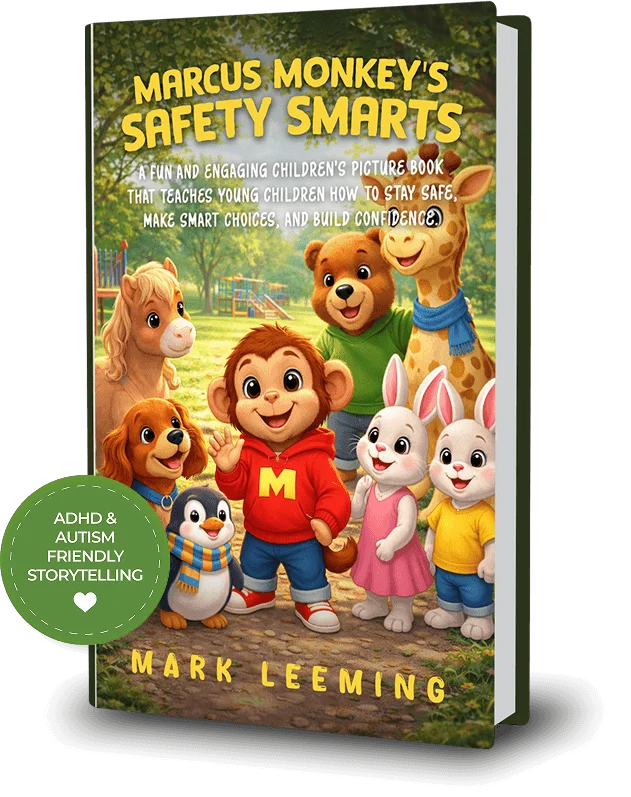
Marcus Monkey’s Safety Smarts: Stop. Look. Choose. introduces impulse control through an energetic character children can understand. Marcus loves to run, climb, and jump, but sometimes he moves so quickly that he forgets to think. With help from the Safety Squad, he learns to stop his body, check his surroundings, and choose a safer action.
The book uses simple language, repetition, visual learning, familiar situations, and calm encouragement. It can be especially supportive for children with ADHD or autism who may benefit from predictable routines and clear reminders.
Marcus Monkey’s Safety Smarts gives parents, carers, and teachers a practical tool for teaching children how to manage their energy without making them feel ashamed. It shows young readers that being active is something to enjoy. They simply need to pause, notice what is happening, and make a smart choice before they move.