
If you have ever spent time in a classroom, whether as a teacher, assistant or even a visiting parent, you will know one thing for sure: kids are always on the move. One minute they are sitting cross-legged on the carpet, the next they are halfway across the room chasing a dropped pencil or rushing to be first in line.
And in all that motion, safety can quickly become an afterthought.
That’s why teachers are constantly reminding students: “Walk, don’t run.” “Watch where you are going.” “Be careful!” But here’s the challenge: those words often fade into the background. They are heard, but not always processed, especially in busy, high-energy classrooms.
So how do you make safety lessons stick?
One surprisingly powerful answer is storytime.
Stories have a way of reaching children that direct instructions simply can’t. They capture attention, spark imagination and most importantly, help kids see themselves in the situation. Instead of being told what not to do, children experience what to do through characters they connect with.
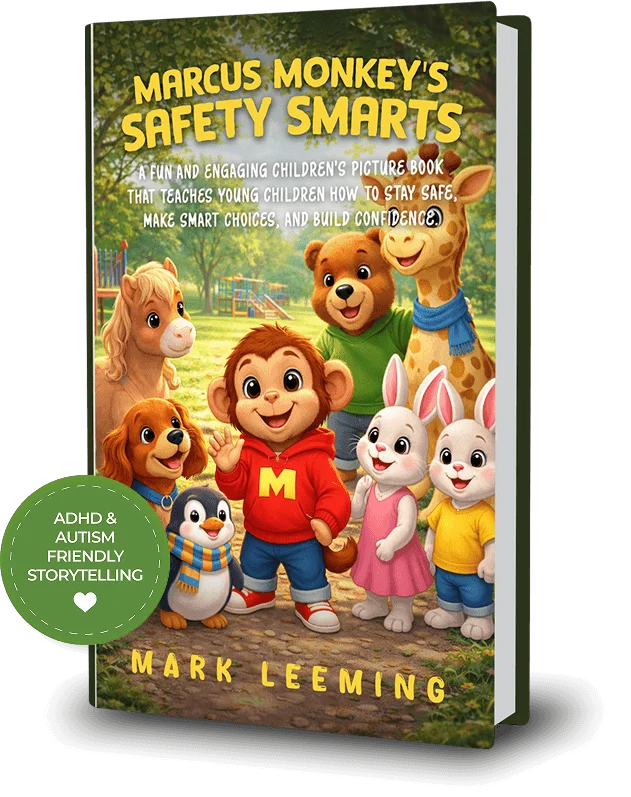
That’s exactly what Marcus Monkey’s Safety Smarts: Stop • Look • Choose by Mark Leeming brings into the classroom.
At first glance, it’s a fun, engaging story about Marcus, an energetic monkey who sometimes moves a little too fast for his own good. But underneath the playful storytelling is a practical, easy-to-teach framework that educators can use every single day: Stop • Look • Choose.
And this is where it becomes a true classroom essential.
Rather than overwhelming children with long lists of rules, the book introduces a simple three-step process. First, Stop pause your body. Then, Look notice what’s happening around you. Finally, Choose; decide the safest way to act.
It’s quick. It’s memorable. And best of all, it’s repeatable.
Teachers can read the story during circle time, then naturally reinforce the message throughout the day. Lining up for recess? “What do we do?” Moving between activities? “Let’s remember our steps.” Suddenly, safety isn’t just a one-time lesson; it becomes part of the classroom culture.
What makes this approach especially valuable is how inclusive it is. In any classroom, you will have a wide range of learning styles and needs. Some children may struggle with impulsivity. Others may find it difficult to process multiple instructions at once.
The beauty of “Stop • Look • Choose” is its clarity.
It gives all students, especially those with ADHD or autism, a simple, structured way to pause and think. No complicated language. No abstract ideas. Just a clear sequence they can rely on, again and again.
And over time, something remarkable starts to happen.
Children begin to use it independently.
Instead of waiting for reminders, they start catching themselves. You might hear a child say, “Wait, I need to stop and look first” or see them pause before climbing, running or reaching. That’s when you know the lesson has truly landed.
It’s not just about preventing accidents (though that’s certainly important). It’s about helping children build lifelong skills, self-awareness, decision-making and confidence in their choices.
For teachers, that’s a win on every level.
And let’s be honest, anything that makes classroom management a little smoother is always welcome. When students share a common language around safety, transitions become easier, reminders become shorter and the overall environment feels calmer and more intentional.
Marcus Monkey’s Safety Smarts: Stop • Look • Choose isn’t just another storybook to add to the shelf. It’s a tool that turns storytime into a meaningful, practical learning experience.
Because when safety is taught through stories, it doesn’t feel like a rule.
It feels like something children understand, remember and choose to follow.
And in a busy classroom, that can make all the difference.